
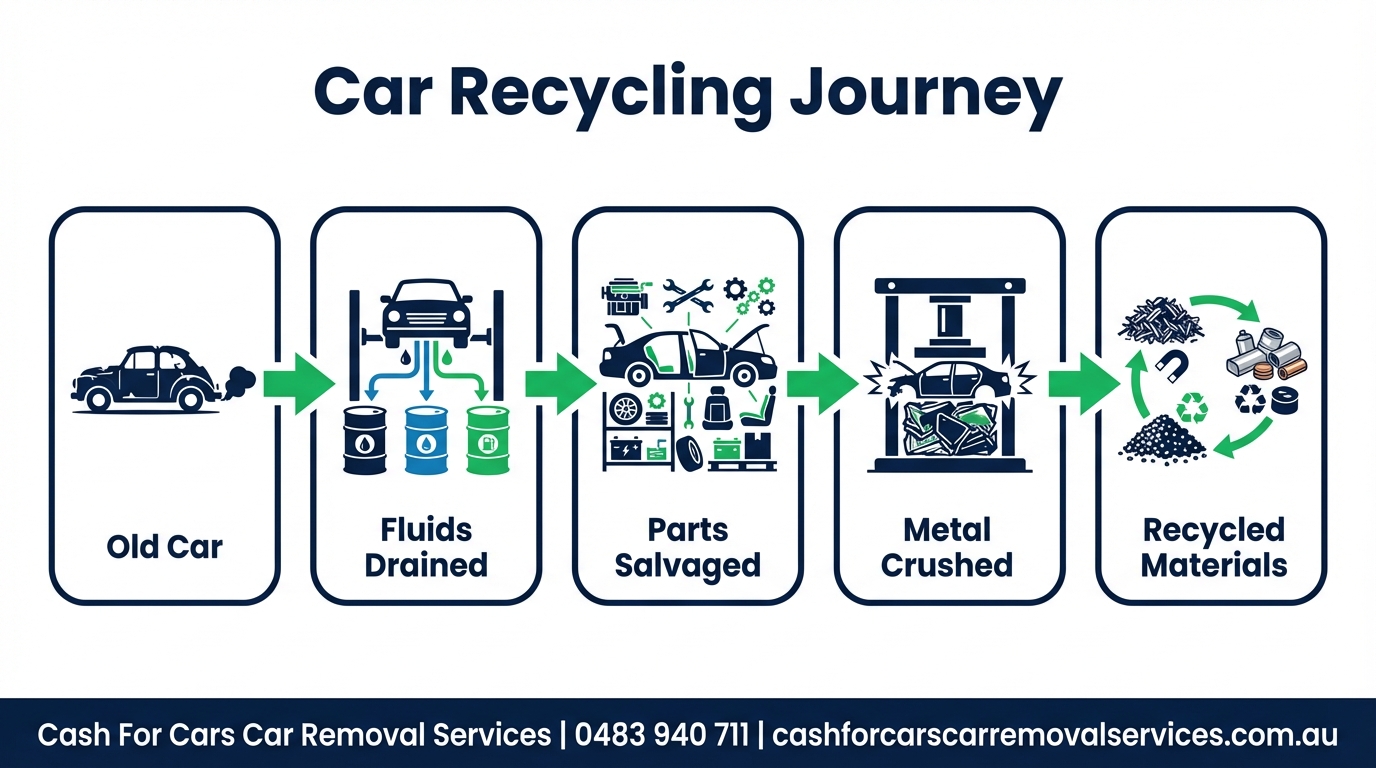
The Journey of a Scrap Car
When you sell your old car to a professional car removal service, it doesn't simply disappear. Instead, it begins an important journey through the vehicle recycling process - one that benefits both the environment and the economy.
Stage 1: Collection and Transport
The first step is free collection from your location. Professional services like ours use flatbed trucks or tow vehicles to safely transport cars regardless of condition:
- Running vehicles can be driven onto carriers
- Non-running vehicles are safely winched
- Accident-damaged cars are carefully loaded
- Fluids removed: Engine oil, transmission fluid, coolant, brake fluid, power steering fluid, fuel
- Batteries extracted: Lead-acid batteries are recycled separately
- Air conditioning gas: CFC gases are safely captured
- Airbags: Unexploded airbags are safely deployed or removed
- Mercury switches: Found in older vehicles' lights and sensors
- Engines and transmissions
- Body panels in good condition
- Electrical components
- Interior parts
- Wheels and tires
- Lights and mirrors
- Industrial shredders tear the body into fist-sized pieces
- Magnets separate ferrous metals (steel, iron)
- Eddy currents separate non-ferrous metals (aluminum, copper)
- Remaining materials are sorted by density
- Steel: Sent to steel mills for remelting
- Aluminum: Recycled into new aluminum products
- Copper: Extracted from wiring for recycling
- Plastics: Sorted and recycled where possible
- Glass: Ground and recycled or used in construction
- Rubber: Used in playground surfaces, road construction
- Textiles: Shredded for insulation materials
- Recycling steel uses 60% less energy than producing new steel
- Recycling aluminum uses 95% less energy than new production
- Reduces mining and raw material extraction
- Less manufacturing means fewer carbon emissions
- Proper disposal prevents hazardous material leakage
- Reduces landfill waste
- 95% of a modern car can be recycled
- 14 million tonnes of steel are recycled from cars annually worldwide
- Each recycled car saves approximately 2,500 kg of iron ore
Stage 2: Depollution
Before any dismantling begins, vehicles undergo depollution - the careful removal of hazardous materials:
Definition: Depollution is the mandatory process of removing all hazardous materials from end-of-life vehicles before recycling, required by Australian environmental regulations.
Stage 3: Parts Recovery
Reusable parts are carefully removed and tested:
These parts enter the second-hand parts market, providing affordable alternatives for car repairs and reducing manufacturing demand.
Stage 4: Shredding
After usable parts are removed, the vehicle shell goes to the shredder:
Stage 5: Material Recycling
Metals (75% of vehicle weight)
Other Materials
Environmental Benefits
Resource Conservation
Emission Reduction
Statistics
Our Commitment to Responsible Recycling
At Cash For Cars Car Removal Services, we partner with licensed recycling facilities that meet all Australian environmental standards. When you sell your car to us, you can be confident it will be processed responsibly.
Conclusion
Selling your scrap car isn't just about getting cash - it's about contributing to a sustainable future. Every vehicle recycled means less mining, less manufacturing pollution, and more resources for future generations.
Ready to recycle your old vehicle? Call 0483 940 711 for a free quote and environmentally responsible car removal.