
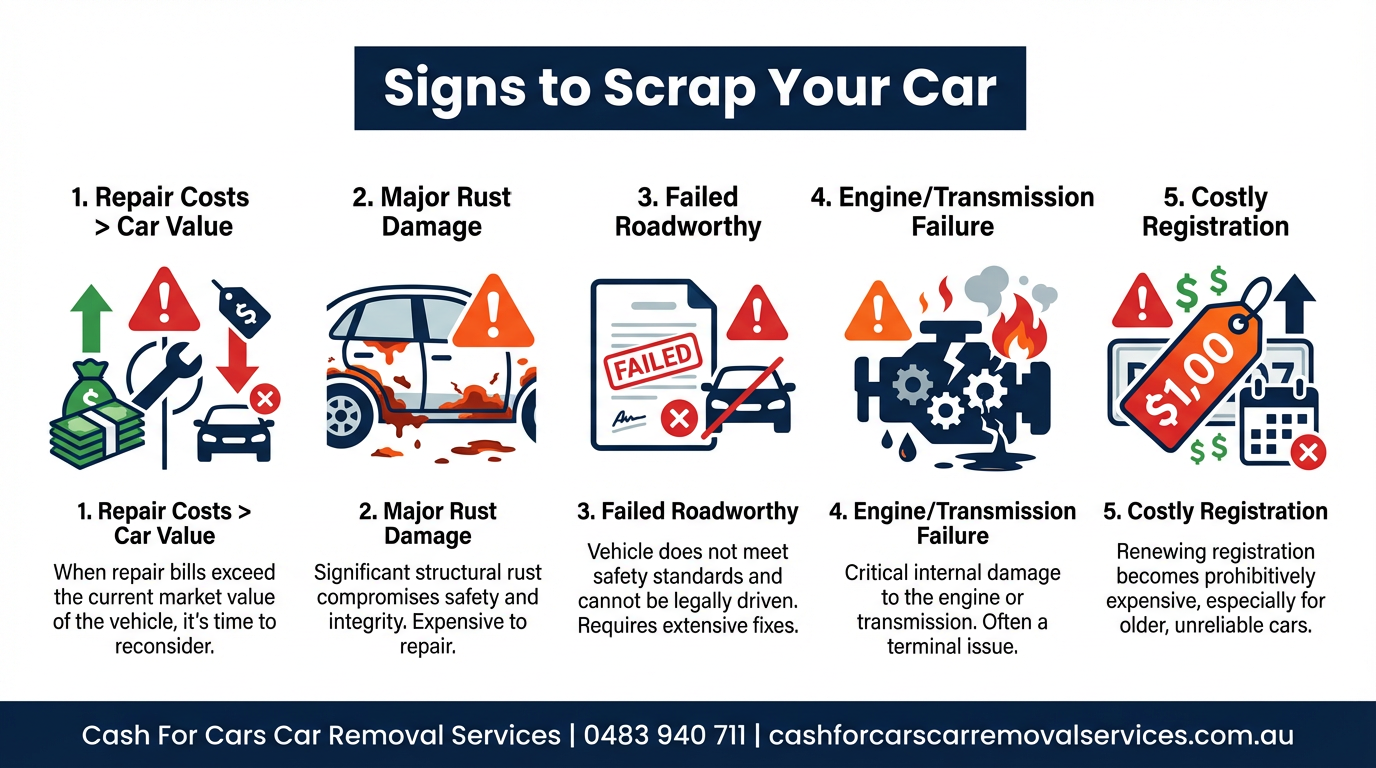
The Repair vs. Replace Dilemma
Every car owner eventually faces the question: Should I repair my car or sell it? Making the wrong choice can cost thousands. Here are 10 clear signs it's time to sell.
Sign 1: Repair Costs Exceed Vehicle Value
The 50% Rule: If a single repair costs more than 50% of your car's value, it's generally not worth fixing.
Example: Your car is worth $3,000, but needs a $2,000 transmission repair. After paying for the repair, you'll have spent $2,000 on a car still worth only $3,000.
Sign 2: Multiple Major System Failures
When several major systems fail simultaneously, it signals age-related deterioration:
- Engine problems
- Transmission issues
- Suspension failures
- Electrical system faults
- Cooling system failures
- Floor pans rusting through
- Frame rail corrosion
- Suspension mounting point rust
- Subframe deterioration
- Increased oil consumption
- Declining fuel economy
- Persistent engine noises
- Transmission slipping
- Worn suspension components
- ABS system is faulty
- Airbag warning lights stay on
- Brakes need constant attention
- Steering has excessive play
- Structural damage from accidents
- Emission system failures
- Brake wear beyond limits
- Suspension component wear
- Tire and wheel issues
- Lighting and electrical faults
- Manufacturer stopped production
- Aftermarket suppliers have moved on
- Only available from wreckers at premium prices
- Frequent breakdowns
- Stranded multiple times in the past year
- Different problems each breakdown
- Can't trust the car for important trips
- High insurance premiums (older cars can cost more to insure)
- Registration fees
- Scheduled maintenance
- Consumables (tires, brakes, fluids)
- All repairs
- Maintenance
- Registration
- Insurance
- Immediate payment - Cash in hand today
- No repair costs - Sell as-is
- Free removal - No towing expenses
- Quick process - Same-day service available
- Put cash toward replacement - Start fresh with a reliable vehicle
- Running or not running
- Damaged or undamaged
- High or low mileage
- Any make or model
If two or more major systems need replacement, the car has likely reached end-of-life.
Sign 3: Rust Has Taken Hold
Surface rust can be treated, but structural rust is a death sentence:
Once rust compromises structural integrity, the car becomes unsafe regardless of mechanical condition.
Sign 4: High Mileage Warning Signs
Most vehicles experience significant wear after 200,000 km:
Sign 5: Failed or Failing Safety Systems
Safety is non-negotiable. Consider selling if:
Sign 6: The Car Won't Pass Inspection
If your vehicle repeatedly fails roadworthy inspections, the repair costs will continue mounting. Common failures include:
Sign 7: Parts Are Becoming Unavailable
Older vehicles often suffer from parts obsolescence:
If you can't find parts, you can't fix the car.
Sign 8: Reliability Has Become Unpredictable
Signs of unreliability:
Unreliable transportation costs more than just money - it costs peace of mind and opportunity.
Sign 9: Insurance or Registration Exceeds Value
When annual costs approach vehicle value:
Sign 10: The Math Doesn't Work
Total the last 12 months of expenses:
If this total exceeds the car's current value, you're paying to keep an asset that's losing value.
What to Do Instead
When these signs appear, selling for cash offers advantages:
Our Offer
Cash For Cars Car Removal Services buys vehicles in any condition:
We pay up to $30,000 and offer free removal Australia-wide.
Conclusion
Knowing when to stop repairing and start selling is a crucial financial decision. If you've recognized several of these signs in your vehicle, it's likely time to let go. Call 0483 940 711 today for a no-obligation quote and see what your car is worth.